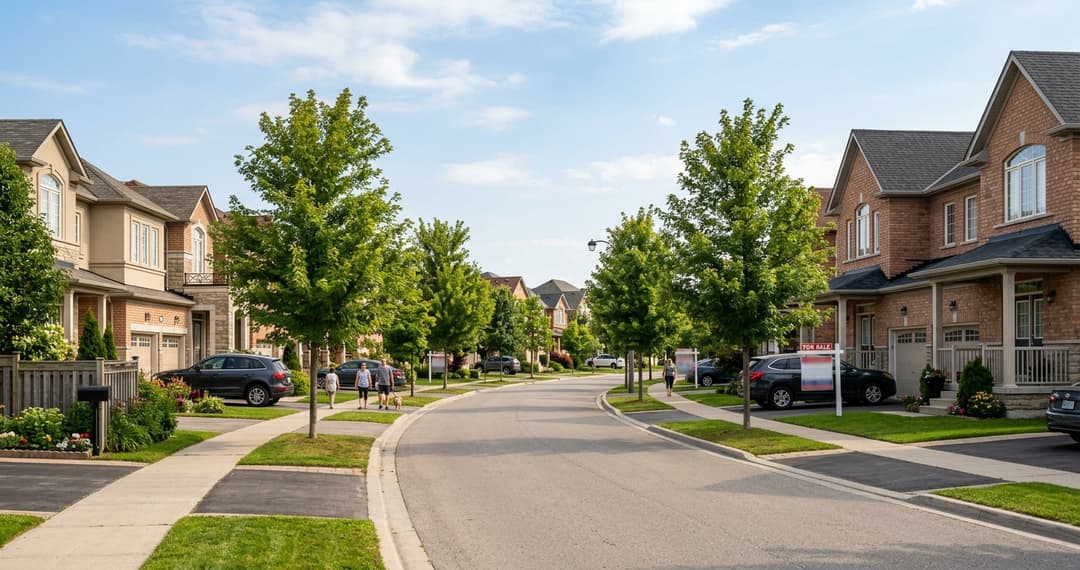
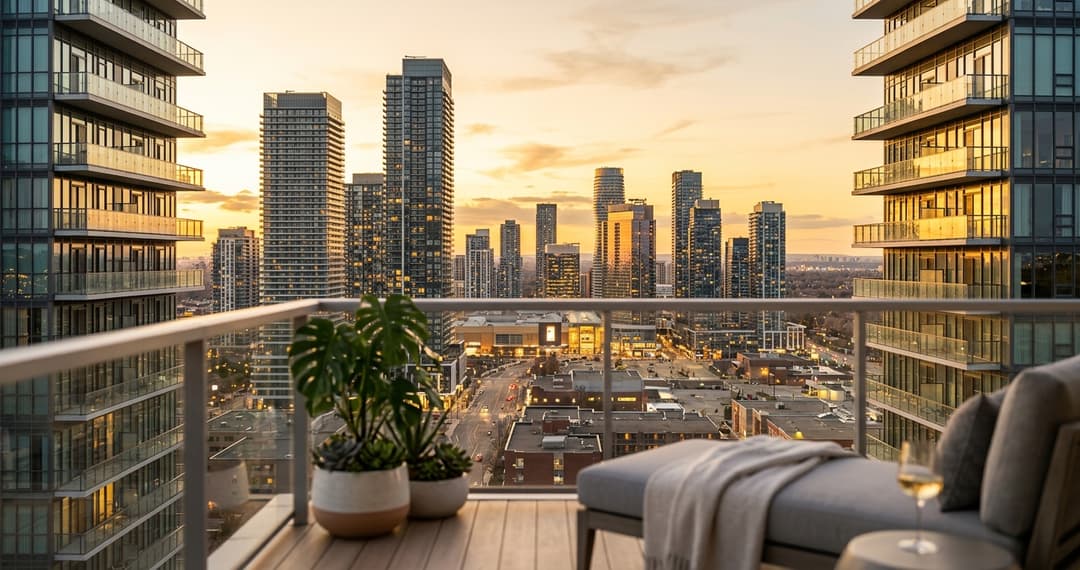
Spring is usually the busiest season in GTA real estate. Listings pile up, buyers come out of hibernation, and by May everyone's negotiating on something.
April 2026 looks a little different.
This spring, Brampton and Mississauga are firmly in buyer's market territory — and the combination of rising inventory, stabilizing prices, and the new HST rebate on new homes is creating one of the most interesting windows we've had in years.
Here's a straight-talking look at where the market actually sits right now, broken down by city, and what it means for you depending on whether you're buying or selling this spring.
The Headline Numbers
Brampton real estate — April 2026:
Average house price: $885,345
New listings in the last 28 days: 1,222
Median days on market: 27 days
Market condition: buyer's market, trending toward balanced
Mississauga real estate — April 2026:
Average house price: $971,205
New listings in the last 28 days: 1,557
Median days on market: 28 days
Market condition: buyer's market, with pockets of strong demand
Both cities are telling the same story: more homes for sale, more time to decide, and sellers who are increasingly willing to negotiate. That's a meaningful shift from the frantic bidding wars of 2021 and 2022.
What's Actually Moving (And What Isn't)
Not every property is performing the same way. A few patterns are clear on the ground:
Semi-detached homes in Brampton are the strongest segment. First-time buyers who were priced out of detached homes two years ago are coming back into the market, and semis at $800K–$900K are moving within the first two weeks when they're priced and staged well. If you're selling a semi in Brampton this spring, the market is on your side.
Condos in Mississauga are mixed. Square One and Port Credit continue to be desirable, with good units selling in under 20 days. Older buildings with higher maintenance fees are sitting longer — sometimes 40-60 days — and buyers are negotiating hard.
Detached homes in the $1M–$1.4M range are the slowest-moving segment. In both cities, these properties take the longest to sell and see the most price adjustments. That's partly because many of these buyers are move-up buyers who have to sell their current home first, which adds complexity.
Pre-construction and new builds are about to get very hot. The April 1, 2026 HST rebate on new homes up to $1 million means buyers can potentially save up to $130,000 on a new build. Expect a flood of interest at Brampton, Mississauga, and Oakville developments over the next six to twelve months.
The Top Mississauga Neighbourhoods Right Now
Three neighbourhoods continue to be the most sought after heading into spring 2026:
Cooksville — Strong transit access, walkable to Square One, and a mix of mature single-family homes and newer mid-rises. Popular with young families and downsizers.
Square One / Mississauga City Centre — Still the centre of gravity for condos. The LRT extension, employment density, and amenities keep demand consistent even in softer markets.
Port Credit — Waterfront lifestyle, the GO train, and the ongoing redevelopment around Brightwater make this one of the most resilient neighbourhoods in the GTA.
If you're a buyer, these neighbourhoods will be more competitive than the city-wide numbers suggest. Good properties still sell quickly here.
What's Happening in Brampton's Top Communities
Brampton isn't one market — it's a collection of them. A few stand out this spring:
Mount Pleasant — Young families, strong schools, and newer inventory. Semis and townhouses are the sweet spot for first-time buyers.
Credit Valley — Higher-end detached homes. Slower pace, but well-priced listings still find buyers.
Bram East / Gore — Good value on larger lots, popular with multigenerational households.
Downtown Brampton — The revitalization story continues. Condos and townhouses near the GO station are seeing renewed interest.
One thing I tell Brampton buyers every spring: don't just look at the city average. The price gap between neighbourhoods in Brampton can be $200K or more for a similar-sized home. Local knowledge is the difference between a good purchase and a great one.
What This Means If You're Buying
The spring 2026 market is more forgiving than we've seen in years — if you play it right.
You have time. With median days on market around 27–28 days, you don't have to make a snap decision at the first showing. Go see the home twice. Sleep on it. Ask questions. The days of "you have two hours to offer" are mostly behind us for the moment.
You have leverage. Conditional offers (financing, inspection) are back. A well-structured offer at asking or slightly below is being accepted regularly. That was almost impossible in 2021.
You can negotiate on more than price. Closing dates, appliances, even chattels and fixtures — sellers are more willing to work with reasonable requests this spring.
The new HST rebate changes the math on new construction. If you've only been looking at resale, it's worth having the conversation about pre-construction in Brampton, Mississauga, Oakville, or Milton. On the right project, the savings are substantial.
Get pre-approved properly before you start serious showings. With fixed rates around 4.04–4.29% and variable around 3.35%, the right mortgage structure matters more than ever. A pre-approval is free, it's fast, and it tells you exactly what price range makes sense.
What This Means If You're Selling
Selling into a buyer's market takes a different approach than selling in 2021 did. The properties that move quickly share three things:
1. Pricing is honest from day one.
Overpricing and then reducing is the biggest mistake I see. Buyers track listings online — they notice when a home has been sitting for six weeks at too-high a price, and they assume something's wrong with it. Price it right the first time.
2. Staging matters more than ever.
When a buyer is comparing three semis in the same Brampton neighbourhood, the one that looks move-in ready wins. This is where my background in architectural design and home staging genuinely helps — and it's free consulting I give every seller client I work with.
3. Photos and marketing are doing more work.
Great photography, floor plans, video, and strong online presentation are non-negotiable at this price point. A tired listing with phone photos will sit.
If you've been thinking about selling but you're worried about the "softer market," the honest truth is: well-prepared homes at the right price are still selling inside 30 days. The sellers having a hard time are the ones who priced for 2022 and haven't adjusted.
Looking Ahead
Most forecasters expect prices in Brampton and Mississauga to stay roughly flat to down 1–2% through the first half of 2026, before starting to recover in 2027. The Bank of Canada is holding rates steady. The HST rebate is putting energy into the new construction segment. Inventory should peak this spring and start to tighten by summer.
For buyers, that suggests April, May, and early June are the sweet spot of the year — maximum choice, reasonable competition, and lenders competing for your business.
For sellers, it's a year to focus on preparation. If you can position your home well — pricing, staging, marketing — you'll stand out from the homes that aren't putting in the work.
The Bottom Line
The April 2026 Brampton and Mississauga real estate market isn't a crash, and it isn't a boom. It's a genuinely balanced, thoughtful market — and honestly, those are the most rewarding ones to buy or sell in.
Whether you're thinking about your first home, trading up, downsizing, or just wondering what your current property is worth, the right move starts with real information.
Want a market read on your specific neighbourhood or a home you're considering?Reach out to Githa Vijo for a no-pressure conversation about the Brampton and Mississauga real estate market this spring.
Market data sourced from publicly available Brampton and Mississauga MLS® statistics, CMHC 2026 Housing Market Outlook, and current Bank of Canada announcements as of April 2026. Figures are averages and do not reflect the value of any specific property.